

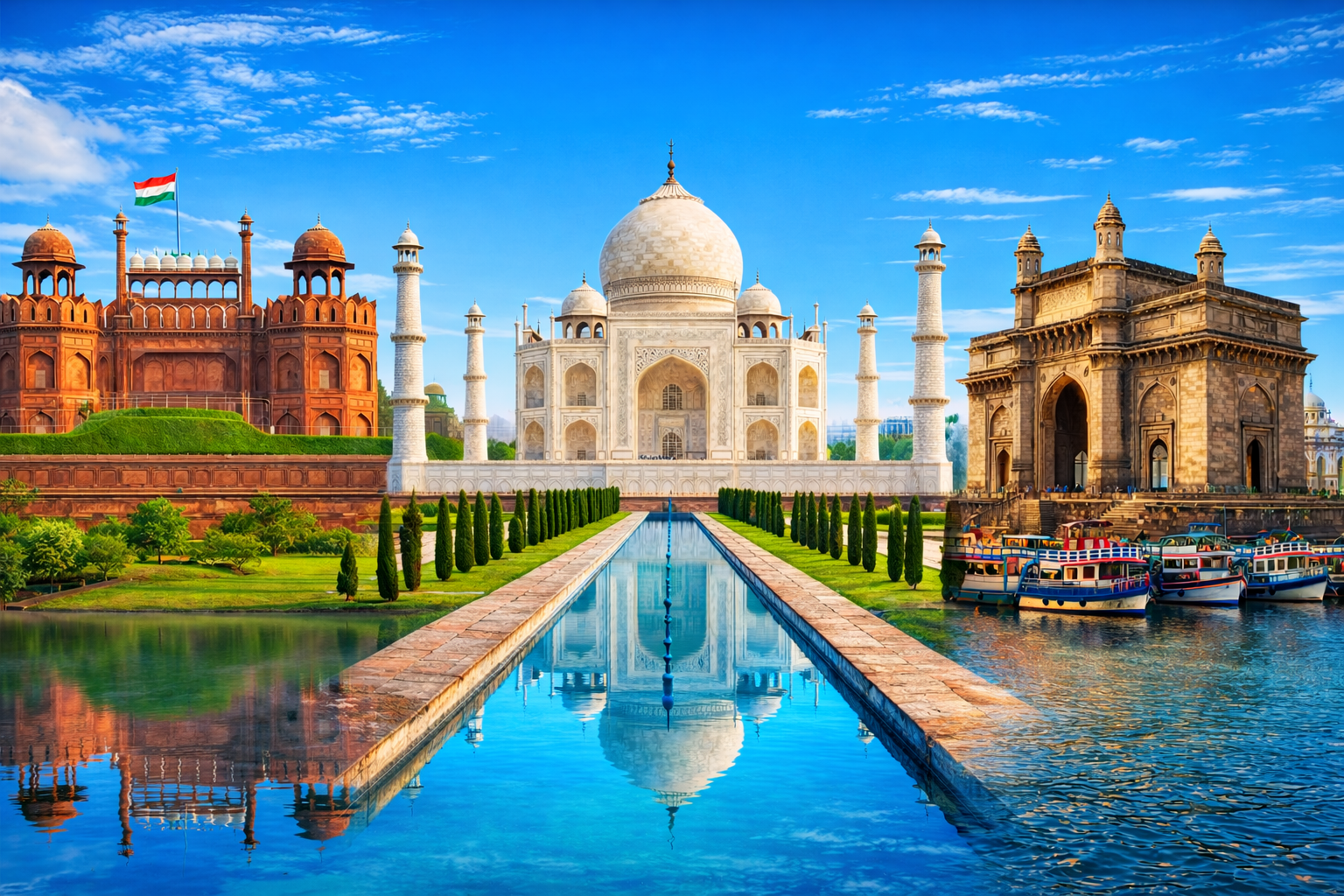
Top 10 Best places to visit in India for first-time travelers offer a mix of history, culture, nature, and adventure. From iconic monuments and vibrant cities to serene beaches and peaceful hill stations, India has something for everyone. This article highlights 25 must-visit destinations, including safe, budget-friendly, and offbeat spots, helping you plan an unforgettable journey across this incredible country.
1. Agra – The Quiet Power of the Taj Mahal
Most travelers arrive in Agra with expectations.
Almost all of them leave surprised.
The Taj Mahal is not loud. It doesn’t compete for attention. It stands there quietly, letting you come to it at your own pace. When you finally stand in front of it, something unexpected happens—you stop thinking about history, photos, or facts. You feel the moment.
Early morning is when the Taj reveals its true self. The marble shifts color with the light, the air feels calm, and the noise of the world seems far away. For many first-time travelers, this is the first moment India feels peaceful rather than overwhelming.
Agra works well as a starting point because everything is straightforward. Clear paths, helpful guides, and an experience that gently introduces you to the scale and beauty of India.
This is where curiosity replaces nervousness.
2. Jaipur – Learning the Rhythm of India
Jaipur doesn’t rush you—but it doesn’t slow down either.
It teaches you how India moves.
You walk through markets where life spills out onto the streets. You climb forts where history feels close enough to touch. You eat food that carries stories of generations.
What makes Jaipur special is the balance. It’s colorful without being chaotic. Traditional without feeling distant. For many travelers, this is the place where confidence grows—you stop hesitating, start exploring freely, and begin trusting your instincts.
Jaipur is often the moment people realize that India isn’t something to control. It’s something to flow with.
Once you understand that, travel becomes easier.
3. Amritsar – Where Humanity Takes Center Stage
Amritsar doesn’t need an itinerary.
The heart of the city beats inside the Golden Temple complex, where people from all walks of life sit together, eat together, and serve one another without expectation.
Watching volunteers prepare and serve food to thousands of people every single day quietly reshapes your understanding of generosity. There’s no announcement, no performance—just consistent kindness.
For first-time travelers, Amritsar feels safe in a way that goes beyond security. It feels emotionally grounding. You don’t feel like an outsider here. You feel like a guest.
This is often where travelers stop feeling like tourists and start feeling connected.
4. Varanasi – Understanding India Without Filters
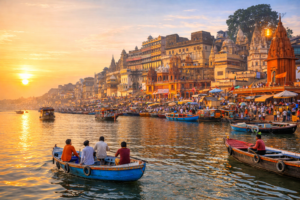
Varanasi doesn’t explain itself.
It doesn’t apologize.
It simply exists.
Here, life unfolds openly. Rituals, prayers, celebrations, and farewells happen in plain sight. It can be confusing at first. It can even feel uncomfortable.
But Varanasi offers something rare—it shows life exactly as it is, without decoration.
For travelers willing to observe rather than judge, this city becomes a teacher. You learn patience. You learn acceptance. You learn that not everything needs to be understood to be respected.
Varanasi is not a place you “enjoy” in the usual sense. It’s a place that stays with you long after you leave.
5. Kerala – Letting India Exhale With You
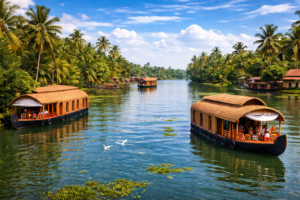
After cities filled with stories and intensity, Kerala feels like a gentle pause.
Here, water moves slowly. Conversations feel softer. Even time seems less demanding. You don’t rush from one place to another. You float, walk, and watch.
Kerala introduces a different idea of travel—one that values rest as much as experience. It’s clean, safe, and deeply comforting, especially for first-time travelers who want to relax without feeling disconnected.
This is where many people finally stop planning and start living in the moment.
Kerala doesn’t ask you to do more.
It invites you to feel more.
6. Goa – Learning to Let Go
Goa doesn’t ask who you are or what you do back home.
It doesn’t care about plans or productivity.
Days here begin when they want to. You wake up with the sound of waves, walk without a destination, and somehow end up exactly where you’re meant to be. Conversations start easily—with strangers, with locals, with yourself.
Some people come to Goa for parties. Others come for peace. Most discover they needed both.
Goa often becomes the first place where travelers truly relax in India. Where they stop trying to understand everything and simply enjoy being present.
This is where many friendships deepen—and some journeys quietly change direction.
7. Manali – Finding Joy in the Cold Air
Manali has a way of pulling people together.
You share rooms, meals, stories, and laughter. You walk uphill, breathe colder air, and feel your thoughts clear with every step. The mountains don’t impress you aggressively—they stand there patiently, letting you come to them.
Days pass with chai breaks, roadside stops, and long conversations that stretch late into the night. Snow becomes a reason to laugh like a child again.
Manali isn’t about perfection. It’s about shared moments—the kind you remember years later without needing photos.
This is often where travel starts feeling emotional rather than exciting.
8. Rishikesh – When Stillness and Adrenaline Meet
Rishikesh teaches balance.
One moment, your heart races as the river pushes you forward. The next, you sit quietly, watching lamps float on water, listening to chants carried by the wind.
There’s no pressure here to believe anything. You’re simply invited to pause.
Many travelers come to Rishikesh for adventure and leave with something deeper—clarity, calm, or at least a sense that slowing down doesn’t mean falling behind.
Rishikesh gently shows you that peace isn’t the absence of action.
It’s the presence of awareness.
9. Jaisalmer – Listening to the Silence
Jaisalmer changes how you experience space.
The desert stretches endlessly, and for the first time, emptiness feels full. At night, when city lights disappear and the sky opens up, you realize how rarely you look up anymore.
Sitting by a campfire, listening to folk music carried through the cool desert air, you stop reaching for distractions. You start listening instead.
Jaisalmer reminds you that some places don’t entertain you.
They ground you.
It’s a destination that doesn’t shout—but it leaves an echo.
10. Gokarna – Choosing Quiet Over Noise
Gokarna is not trying to compete with anyone.
There are no loud promises here. Just clean beaches, simple food, and long walks that end whenever you’re ready. Days blend into each other gently. You stop counting time.
People often come here after feeling overwhelmed elsewhere. And slowly, without effort, things settle.
Gokarna teaches an important travel lesson: sometimes the best destinations are the ones that don’t demand attention.
You don’t leave Gokarna with excitement.
You leave with calm.
11. Hampi, Karnataka – Where Time Seems to Pause
Hampi feels like stepping into a storybook left open centuries ago.
Massive boulders balance impossibly on one another. Ancient temples rise from open fields, untouched by modern haste. You can wander freely without fences or crowds pushing you along. The air feels heavy with history, yet it carries an invitation: take your time.
Cycling through the ruins, stopping wherever curiosity leads, you realize that travel doesn’t always need a plan. You climb rocks to watch the sunset paint everything gold, and for a moment, everything feels suspended—like history itself is breathing around you.
Hampi is one of the best offbeat places in India. It’s quiet, inexpensive, and gives first-time travelers a chance to experience freedom that bigger cities never can.
12. McLeod Ganj, Himachal Pradesh – Peace in the Hills
McLeod Ganj isn’t flashy, but it’s full of warmth.
Monks walk past silently, prayer flags flutter in the wind, and cafés hum with the quiet chatter of travelers and locals alike. The mountains create a gentle rhythm, reminding you that not every journey has to be fast or loud.
You can spend a morning sipping chai while clouds roll through the valley, or take a short trek into the woods, listening to birdsong. Adventure exists, but it’s optional. What matters most here is how it makes you feel—lighter, calmer, more present.
For budget travelers, McLeod Ganj is ideal: affordable stays, safe streets, and a sense of belonging that’s hard to find anywhere else.
13. Pondicherry, Tamil Nadu – Where India Whispers
Pondicherry feels soft. Quiet. Intentional.
Colonial streets painted in pastels invite slow walks. Small cafés serve coffee that lingers in your memory. The beaches are calm, and bicycles move through streets without hurry. There’s room here to breathe, notice details, and lose yourself in thought.
It’s a place for reflection. For creativity. For just being. Not every moment needs a photograph. Sometimes, the gentle warmth of the sun on a pastel wall is enough.
Pondicherry is one of the best safe places to travel in India, especially for solo or first-time travelers who want calm without isolation.
14. Darjeeling, West Bengal – Mornings Wrapped in Mist
Darjeeling arrives slowly, like mist curling through tea gardens.
The hills hide and reveal themselves with the clouds. The toy train rattles along its tracks, a nostalgic reminder that some journeys are as much about memory as scenery. Every café, every viewpoint, every quiet street invites pause.
You watch the sunrise over rolling hills, sip local tea, and realize that happiness doesn’t always come from activity. Sometimes it comes from stillness, observation, and the quiet thrill of being somewhere new yet peaceful.
Darjeeling is one of the cheapest places to travel in India but one of the richest in memory.
15. Kodaikanal, Tamil Nadu – Where Silence Speaks
Kodaikanal is gentle. Almost too gentle, if you’re used to cities that never stop.
The roads curve slowly through pine forests. The air smells of rain and soil. Walking around the lake in the early morning, you notice how rare it is to find a place that asks nothing from you—no hurry, no sightseeing targets, no pressure.
You can sit, you can walk, you can just exist. And in that existence, something shifts. Travel stops being a performance. It becomes a quiet dialogue between you and the place.
Kodaikanal is perfect for slow travelers, for those seeking peace, and for anyone wanting to recharge their spirit.
16. Udaipur, Rajasthan – The City of Lakes and Reflection
Udaipur is often described as romantic, but its true gift is quiet elegance.
You stroll along serene lakes reflecting palaces that seem to float on water. The narrow lanes of the old city are welcoming, filled with friendly shopkeepers, cafes, and colors that don’t overwhelm but invite exploration.
For first-time travelers or families, Udaipur is one of the safest and most comfortable places to travel in India. Roads are walkable, the crowd is manageable, and most hotels cater to both international and domestic visitors.
You can spend mornings watching boats glide over Lake Pichola, afternoons wandering through City Palace, and evenings savoring rooftop dinners as the sunset turns everything gold. The rhythm here is calm yet memorable, giving space to absorb the beauty without stress.
17. Munnar, Kerala – Mountains Draped in Tea
Munnar is a gentle reminder that India can be a refuge.
Rolling hills are covered in emerald tea plantations. Mist hovers over valleys in the early morning, and winding roads invite slow exploration. Walking through tea estates or sitting in a small café overlooking the hills, you feel an unusual peace—like the world is far away.
Munnar is also safe, well-developed, and ideal for solo travelers, couples, and families alike. Budget stays, homestays, and mid-range resorts make it accessible for almost any traveler.
Traveling here isn’t just about sightseeing—it’s about being part of a living, breathing landscape.
18. Rann of Kutch, Gujarat – A Desert That Feels Alive
The Rann of Kutch is not a city or a hill station—it’s a vast, white expanse that teaches humility and awe.
At sunrise, the salt flats glow like silver. At night, the sky opens up in a way you rarely see elsewhere. It’s quiet, expansive, and incredibly safe for tourists, with local communities ready to welcome travelers with warmth and care.
Visiting during the Rann Utsav festival adds music, handicrafts, folk dances, and local food to the raw beauty of the landscape. Even if you’re not attending the festival, simply walking across the white plains under the sun or stars is unforgettable.
The Rann is one of India’s safest offbeat destinations, offering adventure without compromising comfort.
19. Coorg, Karnataka – Coffee, Forests, and Calm
Coorg is the kind of place that slows you down without asking you to try.
Mist moves slowly through coffee plantations. Small waterfalls appear along quiet roads. Locals greet you with smiles that feel genuine, not rehearsed. Walking through this green paradise, you understand why Coorg is often called the “Scotland of India”—soft hills, peaceful mornings, and a sense of timelessness.
Safe and tourist-friendly, Coorg offers homestays, eco-lodges, and comfortable hotels. It’s ideal for travelers who want nature, relaxation, and minimal crowds without leaving modern conveniences behind.
Coorg isn’t flashy. It doesn’t demand attention. It invites presence, patience, and quiet joy.
20. Shimla, Himachal Pradesh – Safe, Scenic, and Familiar
Shimla is where India feels approachable for the first-time traveler.
Wide streets, clearly marked routes, and tourist-friendly infrastructure make it comfortable to explore. Yet the charm lies in its hills, colonial architecture, and pine-scented air. Morning walks on the Mall Road, evening tea in old cafés, and watching sunsets over the mountains creates memories that linger.
Shimla is safe, organized, and easy to navigate—a perfect blend of scenery and comfort. Families, friends, or solo travelers all find it welcoming.
Shimla shows that travel can be beautiful, safe, and effortless—all at once.
21. Varkala, Kerala – Cliffs, Waves, and Quiet Joy
Varkala isn’t crowded like other beach destinations. Instead, it’s a place where you can hear the waves before you see them, and the cliffs feel like nature’s quiet embrace.
Walking along the cliffside at sunrise, you notice small cafes waking up, fishing boats heading out to sea, and the smell of salt and coconut filling the air. Evenings are magical: the sun dips slowly into the horizon, painting everything gold and pink.
Varkala is perfect for first-time travelers who want peace, beauty, and safety. Budget-friendly stays, welcoming locals, and easy access to beaches make it feel effortless.
It’s here that travelers realize: sometimes the simplest places leave the deepest memories.
22. Leh-Ladakh, Jammu & Kashmir – Where the Sky Meets the Earth
Leh-Ladakh is not a place for hurry. It is a place for awe.
The mountains rise like silent guardians. Rivers carve through valleys that look like they belong on another planet. The air is thin, but the experience is vast. Driving through the winding roads, camping under a sky full of stars, you understand why people speak of Ladakh in whispers.
Safety is key here—roads can be challenging, weather unpredictable—but with preparation, the rewards are unforgettable. This is one of those places that makes you feel alive, small, and profoundly connected all at once.
It’s perfect for friends, adventure lovers, or anyone seeking an offbeat, unforgettable journey.
23. Khajuraho, Madhya Pradesh – Sculpted Stories of Time
Khajuraho isn’t just temples—it’s a lesson in history, art, and human imagination.
Walking through the intricately carved structures, you feel centuries of devotion, celebration, and creativity. The sculptures tell stories that don’t need translation—they speak through movement, emotion, and detail.
For first-time travelers, Khajuraho is accessible, manageable, and surprisingly serene. There are budget accommodations, clear pathways, and guides who bring the history alive without overwhelming you.
It’s a place where culture meets intimacy, and every corner holds a story waiting to be noticed.
24. Rishikesh – The River, The Mountains, The Soul
Though visited by many, Rishikesh never feels ordinary.
You watch the Ganges flow endlessly, carrying prayers, hopes, and lives along its path. Temples line the riverbank, and yoga schools quietly offer space for reflection. You might raft down turbulent waters in the morning, and by evening, sit watching lamps float on the river as chants fill the air.
Rishikesh is safe, welcoming, and profoundly moving. It’s one of the few places where adventure, spirituality, and calm coexist effortlessly.
Travelers often leave with more than memories—they leave with a sense of inner balance.
25. Andaman & Nicobar Islands – Where Time Stands Still
The Andaman Islands are like a hidden secret India has kept for centuries.
White sandy beaches, turquoise waters, and coral reefs that seem untouched by the world create a sanctuary. Snorkeling, exploring small islands, or simply lying in the sun, you feel completely removed from daily life.
For safety and comfort, these islands are excellent for first-time travelers. Resorts, homestays, and guided tours make it easy to explore without stress.
Andaman teaches a final travel lesson: sometimes, the most unforgettable places are those where you simply let the world move around you while you exist fully in the moment.
FAQs:
1. What are the best places to visit in India for first-time travelers?
For first-time travelers, destinations like Agra, Jaipur, Amritsar, Varanasi, Kerala, and Goa offer a perfect mix of culture, comfort, and memorable experiences.
2. Which are the cheapest places to travel in India?
Darjeeling, Kodaikanal, Hampi, Pondicherry, and McLeod Ganj are affordable, budget-friendly options with safe accommodations and local food options.
3. What are the best offbeat places in India?
Hampi, Gokarna, Rann of Kutch, Andaman & Nicobar Islands, and Coorg provide unique, less crowded experiences for travelers looking for something beyond mainstream tourist spots.
4. What are the best places to visit in India with friends?
Manali, Goa, Leh-Ladakh, Gokarna, and Varkala are ideal for friends seeking adventure, beaches, mountains, and shared experiences.
5. Are these destinations safe for solo travelers?
Yes. Places like Udaipur, Pondicherry, McLeod Ganj, Shimla, and Kerala are considered safe for solo travelers, offering comfortable accommodations, friendly locals, and organized transport options.
6. How long should I spend in each place?
Most destinations can be explored in 2–4 days, but places like Leh-Ladakh, Kerala, and Andaman & Nicobar Islands may require 5–7 days for a fuller experience.
India is a country of contrasts, colors, and experiences that stay with you long after your journey ends. From the iconic monuments of Agra to the serene beaches of Varkala, the majestic mountains of Leh-Ladakh, and the offbeat beauty of Hampi, these 25 destinations offer a balance of adventure, culture, calm, and connection. Whether you’re traveling solo, with friends, or with family, India promises memories, stories, and feelings that are unmatched anywhere else in the world. So pack your bags, open your heart, and let India show you its magic—one unforgettable destination at a time.