

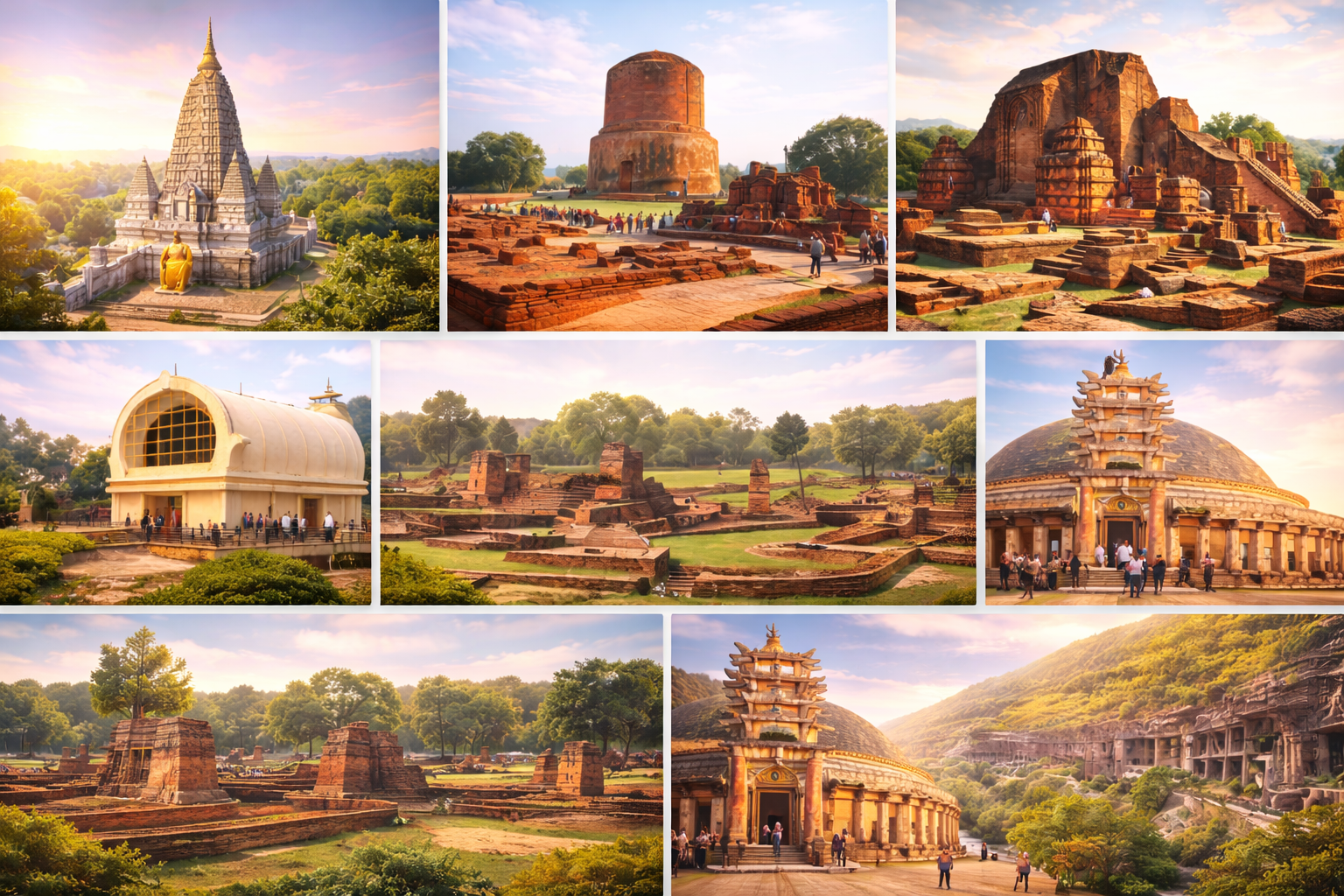
This article will explore the top 10 Buddhist tourist places in India, their historical and spiritual significance, what to see, and practical advice for planning a pilgrimage or leisure visit.
India, the birthplace of Buddhism, is a treasure trove for travelers seeking spiritual growth, cultural exploration, and peaceful retreats. For centuries, pilgrims have journeyed across India to visit sacred sites associated with the life of Siddhartha Gautama, who became Buddha.
From the tranquil monasteries of Himachal Pradesh and Arunachal Pradesh to the ancient stupas of Bihar and the high-altitude Buddhist landscapes of Ladakh, India offers experiences that combine adventure, learning, and inner reflection.
Why India is Central to Buddhism
Buddhism originated in India in the 6th–5th century BCE and spread across Asia, influencing cultures from Tibet to Japan. India remains central to Buddhism for several reasons:
-
Historical Significance: India is home to key events in Buddha’s life—his birth, enlightenment, first sermon, and passing into Nirvana.
-
Architectural Heritage: Ancient stupas, monasteries, and cave temples showcase Buddhist art, symbolism, and philosophy.
-
Spiritual Environment: Monasteries in serene Himalayan valleys and forests create ideal spaces for meditation and reflection.
-
Cultural Diversity: India represents multiple Buddhist traditions—Theravada, Mahayana, and Vajrayana—allowing travelers to experience diverse practices and teachings.
Understanding the Life of Buddha
To fully appreciate Buddhist sites in India, understanding Buddha’s journey is essential:
-
Birth: Siddhartha Gautama was born in Lumbini (modern-day Nepal).
-
Renunciation: He left the royal life seeking spiritual truth.
-
Enlightenment: Achieved under the Bodhi tree in Bodh Gaya.
-
First Sermon: Delivered in Sarnath, Uttar Pradesh, sharing the Four Noble Truths.
-
Parinirvana: Passed away in Kushinagar, entering Nirvana.
Many sites in India are pilgrimage destinations because they are directly connected to these life events.
Top Buddhist Tourist Places in India
1. Bodh Gaya, Bihar
Bodh Gaya is the spiritual heart of Buddhism, where Siddhartha Gautama attained enlightenment under the sacred Bodhi Tree. Pilgrims and travelers from around the world visit to pay homage to this holy site. The Mahabodhi Temple, a UNESCO World Heritage Site, is the centerpiece of Bodh Gaya, featuring a towering spire and intricate carvings that reflect ancient Indian architecture. The Bodhi Tree, carefully nurtured as a direct descendant of the original tree, offers a serene environment for meditation and reflection.
Visitors can explore various international monasteries in Bodh Gaya, including Tibetan, Japanese, and Thai monasteries, each offering unique cultural experiences. Attending morning prayers and meditation sessions allows travelers to witness the peaceful rhythms of monastic life. Festivals like Buddha Jayanti fill the city with a vibrant yet spiritual atmosphere, with lanterns, prayers, and devotional chants.
Travel Tips:
-
Stay near the Mahabodhi Temple for easy access and spiritual immersion.
-
Hire a local guide to understand the temple’s art, murals, and historical significance.
-
Ideal visit: October to March for pleasant weather and clear skies.
2. Sarnath, Uttar Pradesh
Sarnath, near Varanasi, is historically significant as the site where Buddha delivered his first sermon, introducing the Four Noble Truths and the Eightfold Path. This peaceful town is ideal for travelers seeking a blend of spirituality and history. The Dhamek Stupa stands as a monumental reminder of Buddha’s teachings, while the Mulagandha Kuti Vihara houses beautiful murals depicting Buddha’s life and events of his era.
The Archaeological Museum of Sarnath is a treasure trove, showcasing sculptures, relics, and artifacts from early Buddhist civilizations. Travelers can participate in morning meditation sessions and observe monks chanting, creating an atmosphere of calm and reflection. Walking through the gardens surrounding the stupas, visitors can connect with the tranquility that inspired Buddhist teachings centuries ago.
Travel Tips:
-
Early morning is the best time to experience the serene ambiance before the crowds arrive.
-
Combine a Sarnath visit with nearby Varanasi to enjoy spiritual and cultural exploration.
-
Best time to visit: October to March for comfortable weather.
3. Kushinagar, Uttar Pradesh
Kushinagar is revered as the place of Buddha’s Mahaparinirvana, where he passed into Nirvana. The town exudes a sense of quiet reverence, perfect for reflective and spiritual travelers. The Parinirvana Stupa houses a reclining Buddha statue, symbolizing Buddha’s final moments, while the Mahaparinirvana Temple preserves relics and artifacts linked to his life.
Visitors often spend hours walking through the temple complex and surrounding gardens, reflecting on the teachings of impermanence and enlightenment. The town’s peaceful atmosphere makes it ideal for meditation or simply sitting in silent contemplation near ancient stupas. Local festivals and rituals offer glimpses into the living traditions of Buddhism practiced in the region.
Travel Tips:
-
Hiring a knowledgeable guide helps visitors understand the history and significance of the stupas.
-
Best time to visit: November to February, when the climate is cool and comfortable.
-
Combine with Bodh Gaya and Sarnath for a full Buddhist pilgrimage.
4. Tawang, Arunachal Pradesh
Tawang, in northeastern India, is home to one of the largest monasteries in the country, perched at an altitude of over 10,000 feet. The Tawang Monastery is a spectacular architectural marvel with stunning murals, prayer halls, and a library of ancient Buddhist scriptures. Visitors can admire the Guru Rinpoche statue and enjoy panoramic views of the snow-capped Himalayas.
The town offers a unique cultural experience, where locals follow Tibetan Buddhist traditions. Tourists can attend morning rituals, chanting sessions, and traditional festivals, gaining insight into monastic life. Nearby attractions like Nuranang Waterfall and small villages provide opportunities for trekking and exploring the Himalayan landscape.
Travel Tips:
-
Acclimatize before visiting due to high altitude.
-
Best visited between April and October to avoid snow-blocked roads.
-
Local homestays offer authentic experiences and Tibetan cuisine.
5. Dharamshala & McLeod Ganj, Himachal Pradesh
Dharamshala, especially McLeod Ganj, is a hub of Tibetan Buddhism in India, hosting the residence of the Dalai Lama. The Namgyal Monastery and Tsuglagkhang Complex are central attractions where visitors can attend teachings, meditation sessions, and explore Tibetan art. The Bhagsunath Temple and Tibetan Museum offer additional insights into local culture and history.
The region combines spirituality with natural beauty. Hiking trails like Triund allow travelers to experience Himalayan landscapes alongside monastery visits, creating a balanced journey of adventure and reflection. The local markets offer Tibetan handicrafts, prayer flags, and books on Buddhist philosophy.
Travel Tips:
-
Best visiting months: March to June and September to November.
-
Engage in meditation or mindfulness sessions for a more immersive experience.
6. Rumtek Monastery, Sikkim
Rumtek Monastery is one of the most important Buddhist centers in eastern India and a spiritual landmark of Sikkim. Located near Gangtok, this monastery belongs to the Karma Kagyu lineage of Tibetan Buddhism and serves as the seat of the Gyalwa Karmapa in exile. Surrounded by rolling hills, forests, and clouds drifting across the valley, Rumtek feels deeply peaceful the moment you arrive.
The monastery complex is beautifully designed, with a grand prayer hall, golden stupa, intricate wall paintings, and rows of prayer wheels that visitors gently spin while walking in silence. Inside, monks chant early in the morning and late in the evening, filling the halls with rhythmic sounds that naturally slow your thoughts. Even if you are not religious, the calm energy of the place has a grounding effect.
Rumtek is also a place of learning. Monks study Buddhist philosophy, meditation, and rituals here, and visitors are welcome to observe daily practices respectfully. During festivals like Losar (Tibetan New Year) and Kagyu Monlam, the monastery becomes vibrant with masked dances, prayers, and traditional music.
Practical advice:
-
Best time to visit: March to June and September to November
-
Dress modestly and maintain silence inside prayer halls
-
Combine your visit with nearby monasteries and Gangtok sightseeing
7. Hemis Monastery, Ladakh
Hemis Monastery is the largest and most famous monastery in Ladakh, set against the dramatic backdrop of barren mountains and deep valleys. Founded in the 17th century, it belongs to the Drukpa lineage of Tibetan Buddhism and is best known for the annual Hemis Festival, which attracts travelers from across the world.
Walking into Hemis feels like stepping into another world. The monastery complex is filled with ancient thangkas, statues, murals, and a quiet courtyard where monks gather for prayers. The energy here is powerful yet peaceful, especially in the early morning when chants echo through the mountains. The museum inside the monastery displays rare relics, ancient scriptures, and ritual objects that offer insight into Ladakh’s spiritual heritage.
The Hemis Festival, held in June or July, celebrates Guru Padmasambhava and features colorful masked dances, drums, and traditional rituals. Even outside festival season, the monastery offers deep spiritual value through its setting, silence, and sense of timelessness.
Practical advice:
-
Best time to visit: June to September
-
Acclimatize properly due to high altitude
-
Carry warm clothing even in summer
8. Thiksey Monastery, Ladakh
Often compared to the Potala Palace of Tibet, Thiksey Monastery is one of the most visually striking Buddhist monasteries in India. Perched on a hilltop overlooking the Indus Valley, Thiksey belongs to the Gelug sect and offers sweeping views of Ladakh’s stark yet beautiful landscape.
The monastery is arranged in tiers, with whitewashed buildings, red ochre accents, and golden roofs catching the sunlight. Inside, visitors will find prayer halls, meditation rooms, libraries, and the iconic 15-meter-tall statue of Maitreya Buddha, which radiates calm and compassion. Morning prayers are particularly special here—monks chant as the sun rises over the mountains, creating a deeply moving experience.
Thiksey is ideal for travelers who want both spiritual depth and visual beauty. You don’t need to rush—simply sitting quietly in the courtyard or walking slowly through the halls can be a meditative experience. Photography is allowed in many areas, but always ask before clicking pictures inside prayer halls.
Practical advice:
-
Visit early morning for prayers and fewer crowds
-
Best season: June to September
-
Combine with Hemis and Shey Monastery in one day
9. Alchi Monastery, Ladakh
Alchi Monastery stands apart from other Ladakh monasteries due to its ancient artwork and wooden architecture. Unlike hilltop monasteries, Alchi is located in a village near the Indus River, making it easily accessible and uniquely grounded.
Dating back to the 11th century, Alchi is famous for its well-preserved murals, carvings, and paintings, some of the oldest surviving examples of Buddhist art in the region. The artwork reflects Indian, Kashmiri, and Tibetan influences, offering valuable insight into early Buddhist history. Walking through the dimly lit halls, you feel a sense of quiet reverence, as if time has slowed down.
Alchi is less crowded than popular monasteries, making it ideal for travelers seeking solitude and reflection. The surrounding village adds to the experience—simple homes, local cafés, and river walks create a balanced spiritual and cultural visit.
Practical advice:
-
Best time: June to September
-
Hire a local guide to understand the murals’ symbolism
-
Stay overnight nearby to enjoy the village atmosphere
10. Vaishali, Bihar
Vaishali holds immense historical importance in Buddhism, as it is the place where Buddha delivered his last sermon and announced his impending Mahaparinirvana. Unlike crowded pilgrimage towns, Vaishali remains calm, spacious, and deeply reflective.
The Vishwa Shanti Stupa, built with international collaboration, stands as a symbol of peace and harmony. Nearby, the ancient Ashokan Pillar and relic stupas connect visitors to the early spread of Buddhism under Emperor Ashoka. Walking through Vaishali feels like walking through layers of history—quiet fields, ruins, and monuments speak softly of ancient teachings.
Vaishali is ideal for travelers who want to explore Buddhism beyond the popular tourist circuit. The simplicity of the surroundings encourages slow travel, contemplation, and a deeper understanding of Buddha’s teachings on impermanence and compassion.
Practical advice:
-
Best time to visit: October to March
-
Combine with Rajgir, Nalanda, and Bodh Gaya
-
Carry water and plan transport in advance, as facilities are limited
Final Thoughts
Exploring Buddhist tourist places in India is more than sightseeing—it’s a journey of inner peace, cultural discovery, and spiritual learning. From Bodh Gaya’s sacred Bodhi Tree to the remote monasteries of Ladakh and Arunachal Pradesh, every destination provides an opportunity for reflection, meditation, and connection with history.
India’s Buddhist heritage invites travelers to slow down, observe, and immerse themselves in a world of mindfulness and serene landscapes. Respect local traditions, participate actively, and embrace the teachings and tranquility these ancient sites have preserved for centuries.